Understanding the various forms of variable message signs is essential for deploying the right communication tool for any traffic scenario. These dynamic units have evolved beyond a single design, offering specialized solutions for permanent, temporary, and mobile applications. We at Chainzone, as experienced variable message signs manufacturers, provide a diverse portfolio designed to meet these distinct needs. This guide explores the primary categories of variable message signs—focusing on fixed, portable, and LED-based systems—to clarify their unique characteristics and ideal use cases, ensuring your investment acts as a truly effective informative traffic sign.
Fixed and Portable VMS: Matching Permanence with Mobility
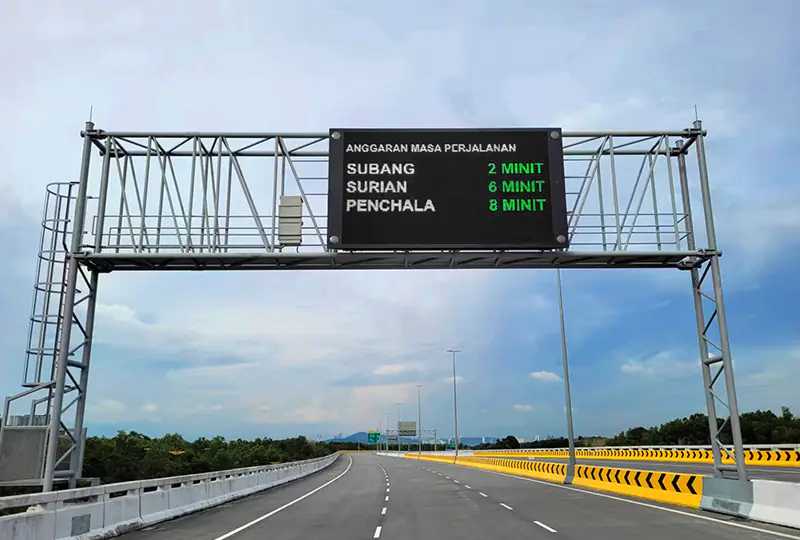
The first major classification hinges on installation and mobility. Fixed variable message signs are permanent structures, typically gantry-mounted over highways or on robust poles at key arterial intersections. These units are workhorses for continuous traffic management, delivering real-time updates on congestion, incidents, or lane closures directly to drivers. As a cornerstone of intelligent transport systems, a fixed Chainzone EN 12966 VMS offers unparalleled reliability for 24/7 operation. In contrast, portable variable message signs are trailer-mounted or smaller, self-contained units designed for temporary deployment. Their value shines during roadworks, accident management, and special events, where they provide crucial, flexible warnings and direction. This mobility allows authorities to bring a dynamic informative traffic sign precisely where it is needed most, with minimal setup time.
LED Technology: The Engine of Modern Visual Communication
At the heart of most modern variable message signs lies Light Emitting Diode (LED) technology, which defines their visual performance and efficiency. As variable message signs manufacturers, we utilize high-resolution, full-matrix LED clusters to create crisp text, symbols, and even simple graphics. The superiority of advanced LED systems is evident in their clarity and adaptability. For instance, the optical design in a Chainzone EN 12966 VMS ensures brilliant visibility and legibility, making the message clear even under direct sunlight or in adverse weather. This technology directly contributes to creating a safer informative traffic sign by preventing nighttime glare and ensuring quick comprehension. Furthermore, modern LEDs are highly energy-efficient, a critical factor for solar-powered portable units or systems aimed at reducing long-term operational costs.
The Unifying Standard: Why EN 12966 Compliance Matters Across All Types
Regardless of the type—fixed, portable, or the underlying LED technology—the commitment to quality remains paramount. This is where the EN 12966 standard becomes a critical differentiator for any informative traffic sign meant for public roads. Choosing EN 12966 compliant variable message signs, like those from Chainzone, provides a universal assurance of quality. This certification guarantees reliability through rigorous environmental and structural testing, ensuring signs withstand complex conditions. It also assures interoperability with traffic management systems and, most importantly, enhances safety with proven optical performance. For any variable message signs manufacturers, adherence to this standard is a testament to a commitment to long-term value, translating into fewer repairs, consistent performance, and ultimately, safer roadways.
Conclusion
The world of variable message signs is diverse, with fixed models providing permanent network intelligence, portable units offering tactical flexibility, and advanced LED technology delivering the clarity required for modern traffic communication. Selecting the correct type, and insisting on models that meet stringent international standards like EN 12966, is key to building an effective and resilient traffic management system. By understanding these differences, authorities can strategically deploy these dynamic tools to enhance their communication with drivers, improving both safety and traffic flow across the entire network.