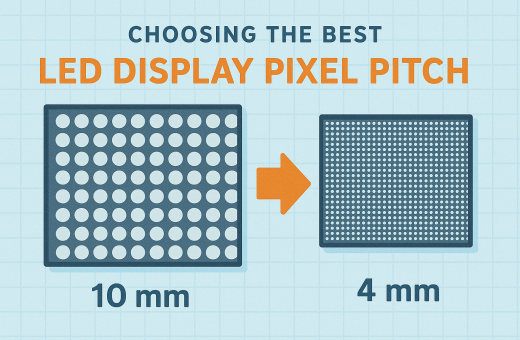
Pixel pitch is the spacing between the centers of two adjacent pixels on an LED screen, determining the screen’s sharpness and detail. Smaller pixel pitches mean higher pixel density and finer images, especially at close range.
Meanwhile, smaller pixel pitches often come with higher upfront costs due to manufacturing complexity. With many options, including P4, P6, P8, P10, and P12 outdoor LED displays, which is your best investment?
As a professional LED display manufacturer, Chainzone offers diverse LED screens with a wide pixel pitch range and knows their differences and ideal applications. This article compares P6 outdoor LED displays, P8 outdoor LED displays, and P10 outdoor LED displays, along with other pixel pitch options, to help you choose the right screen for your specific needs!

Difference Between P4, P6, P8, P10, and P12 Outdoor LED Displays
Here is a clear comparison table of P4 to P12 outdoor LED displays.
| Feature | P4 | P6 | P8 | P10 | P12 |
| Pixel Pitch | 4 mm | 6 mm | 8 mm | 10 mm | 12 mm |
| Pixels per m² (Resolution) | 62,500 pixels/m² | 27,778 pixels/m² | 15,625 pixels/m² | 10,000 pixels/m² | 6,944 pixels/m² |
| Image Quality | Very High | High | Good | Standard | Basic |
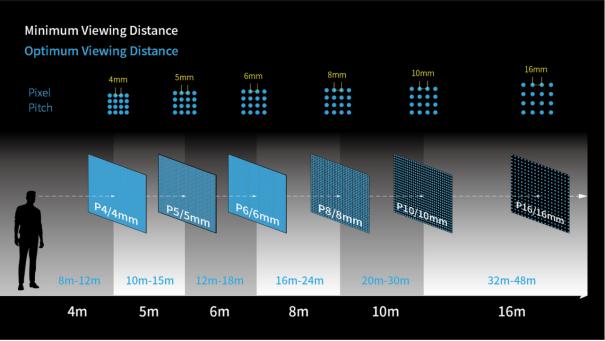
| Optimal Viewing Distance | 8 – 12 m (26 – 40 ft) | 12 – 18 m (40 – 60 ft) | 16 – 24 m (52 – 80 ft) | 20 – 30 m (65 – 100 ft) | 24 – 36 m (80 – 120 ft) |
| Minimum Viewing Distance | ~4 m (13 ft) | ~6 m (20 ft) | ~8 m (26 ft) | ~10 m (33 ft) | ~12 m (40 ft) |
| Best Use Cases | High-end retail, corporate buildings, close-proximity signage, lobbies. | Main street retail, gas stations, building facades, public squares. | Standard billboards, sports venues, medium-distance advertising. | Highway billboards, large stadium screens, long-distance advertising. | Very large billboards, super-sized stadium screens, extreme viewing distances. |
| Cost | Highest | High | Medium | Cost-Effective | Most Economical |
| Pros | Sharp, detailed image even up close. | Excellent balance of quality and cost for many applications. | Good visibility at a lower cost than P6/P4. | Low cost per square meter, bright, good for large areas. | Lowest cost, ideal for massive screens where detail isn’t critical. |
| Cons | Highest cost per square meter. | More expensive than P8/P10. | Not suitable for very close viewing. | Image is pixelated up close. | Lowest resolution, requires the farthest viewing distance. |
Detailed Breakdown of Each Type
1. P4 Outdoor LED Display
Summary: A premium, high-resolution display for applications where viewers are relatively close.
When to Use: Ideal for high-traffic areas where the audience is within 40 feet. Think of a storefront on a busy downtown street, a corporate headquarters, or an entrance to a stadium where people walk right past it. The image remains crisp and legible.
2. P6 Outdoor LED Display
Summary: The sweet spot for many commercial applications, offering high quality without the extreme cost of P4.
When to Use: Perfect for most retail locations, gas station canopies, public information screens in squares, and medium-sized building facades. It provides excellent image quality for viewers between 40 and 60 feet away.
3. P8 Outdoor LED Display
Summary: A robust and popular choice for standard outdoor advertising and events.
When to Use: Great for billboards on major roads, in sports stadiums for the main crowd, and for larger building-side advertisements. It’s a cost-effective solution where the minimum viewing distance is around 25-30 feet.
4. P10 Outdoor LED Display
Summary: The workhorse of long-distance and large-scale outdoor advertising.
When to Use: The most common choice for highway billboards and large-scale stadium screens. If the primary audience is viewing from 65 feet and beyond, a P10 offers tremendous value and impact for its size and cost.
5. P12 Outdoor LED Display
Summary: An economical solution for the largest screens where ultra-fine detail is not required.
When to Use: Reserved for the biggest applications, such as giant billboards visible from over 500 feet away, or as a massive background screen in a stadium where the message needs to be seen, not read in fine print. It prioritizes maximum screen size and cost efficiency rather than close-up clarity.
Two Important Factors When Choosing Different Pixels
Upon the above discussion, you are probably aware of the two key factors to consider when selecting different pixel pitches:
1. Viewing Distance
The general guideline for viewing distance can be calculated as follows:
- Minimum Viewing Distance (mm) ≈ Pixel pitch (mm) × (1000–2000)
- Optimal Viewing Distance (mm) ≈ Pixel pitch (mm) × (2000–3000)
Lower pixel pitch (e.g., P4, P6) provides high resolution and is best for close viewing, where fine details matter. For displays that will be viewed from greater distances, a larger-pixel-pitch display such as P10 or P12 is preferred.
2. Cost
Pixel pitch directly affects cost. A P4 screen has 62,500 pixels per m², while a P10 has only 10,000 pixels per m². That’s over 6 times more LEDs, driver chips, wiring, and solder joints.
Packing all those components tightly requires more advanced manufacturing processes and better quality control. Additionally, more LEDs and chips generally draw more power to run.
The densely packed modules and cabinets also require more sophisticated cooling and maintenance solutions, which is another key factor contributing to the higher cost of low pixel pitch LED displays.
More Factors to Consider When Choosing Outdoor LED Displays
In addition to pixel pitch, there are other important factors you should consider to ensure you have the best fit.
1. Brightness and Visibility
Outdoor LED displays must maintain clear visibility in varying light conditions, including direct sunlight. Brightness, measured in nits, determines how well the screen can display content in daylight. A higher brightness rating ensures that text and visuals remain sharp and easy to read, which is especially critical for outdoor advertising, sports venues, and public announcements.
2. Durability and Weather Resistance
Outdoor LED displays must be built to handle demanding environmental conditions throughout the year. They should operate reliably under exposure to rain, dust, heat, or cold without affecting performance.
Choosing models with strong structural design and a high IP rating, such as IP65 or above, helps protect the system from moisture and debris, extending its lifespan and maintaining stable operation in all climates.
3. Image Quality and Performance
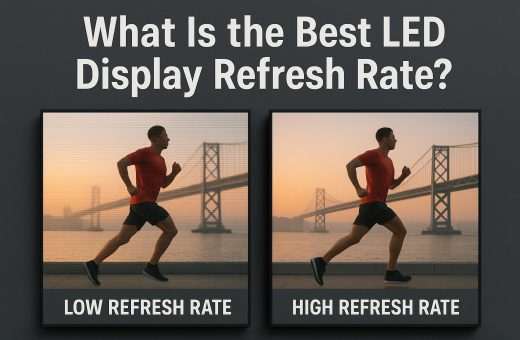
While pixel pitch affects resolution, overall image quality also relies on other factors like color accuracy, contrast ratio, and refresh rate. A display with balanced color reproduction and a high refresh rate provides smoother visuals and vivid imagery, especially for moving content.
4. Energy, Installation, and Maintenance
Choose energy-efficient displays that minimize power consumption while maintaining performance. Installation should be straightforward, and the display should require minimal maintenance, helping to reduce long-term operational costs.
Chainzone Offers High-Performance Outdoor LED Solutions
Chainzone is a global leader in outdoor LED display manufacturing, widely recognized for its commitment to quality and energy efficiency. Our outdoor displays come with the following features:
- High brightness, low energy use: Delivers clear visuals even in direct sunlight without heavy power demand(can achieve up to 80% energy savings).
- Wide pixel pitch range: Offers models from P1 to P17, covering every outdoor application need.
- Reliable weather protection: Built with durable materials and high IP ratings to resist rain, dust, and temperature extremes.
- Versatile product range: Offers models like E4, E4 Pro, V-Plus, and Plus X suited for advertising, stadiums, and transport hubs.
- Superior image performance: Uses SMD and LOB technologies for vivid color, high contrast, and smooth motion display.
- Easy setup and maintenance: Modular design enables quick installation, simplified servicing, and reduced downtime.
- Application flexibility: Suitable for billboards, event screens, commercial buildings, and smart city projects.
Wrapping Up
Selecting the right LED display depends on viewing distance, image clarity, and budget. Simply put:
- Lower pixel pitches, like P4 and P6 outdoor LED displays, create a finer, more detailed image, allowing viewers to stand closer without seeing the individual dots. Their denser resolutions and sophisticated packaging methods require more expense.
- Higher pixel pitches, like P10 and P12 outdoor LED displays, generate a less detailed image, and viewers need to be farther away for the image to look clear and cohesive. They typically cost less as well.
Choosing the right outdoor LED displays also requires other considerations, and a professional LED display manufacturer can offer you helpful guidance and support. Chainzone is always there to help. If you need any further advice and high-performance LED display solutions, feel free to contact us here!