Modern transportation depends on clear, real-time communication. As Chainzone, we’ve witnessed how variable message signs have transformed the way information reaches drivers on roads, bridges, and tunnels. These intelligent systems have become an essential part of every city’s traffic management strategy, helping to reduce congestion and improve safety. But how exactly does a VMS sign work? Understanding the science and technology behind these displays helps explain why they are so effective—and why Chainzone’s innovations have set new benchmarks in the industry.
The Core Technology Behind Every VMS Sign
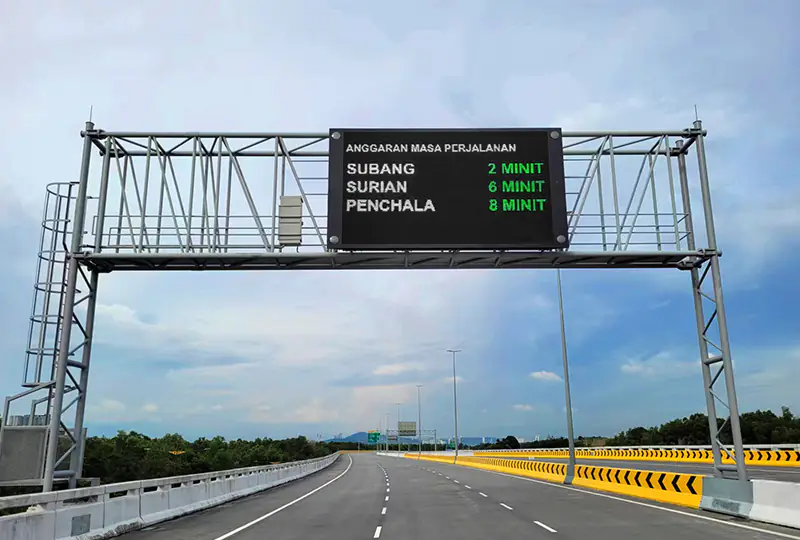
At its foundation, a VMS sign is an electronic display system designed to communicate information dynamically. Unlike static traffic boards, variable message signs use LED-based modules that can display multiple messages depending on traffic conditions, weather, or emergencies. The heart of the system lies in three critical components: the control unit, the optical display, and the communication interface.
The control unit receives data from central traffic management systems or sensors on the road. This data might include information about congestion, accidents, or changing speed limits. The message is then processed and transmitted to the LED display. Chainzone’s VMS boards are built with advanced optical lens technology that meets the EN 12966 standard, ensuring clarity and readability under all lighting and weather conditions.
The optical design is what truly distinguishes our variable message signs. Our patented lens system directs light precisely toward the driver’s line of sight, reducing glare and enhancing visibility. This means that even under direct sunlight or at low sun angles, the displayed message remains bright and easy to read. In nighttime conditions, the system automatically adjusts brightness to avoid dazzling drivers, ensuring safety in every scenario.
Equally important is the environmental adaptability of a VMS sign. Harsh conditions like heavy rain, dust, or extreme temperatures can affect performance. That’s why Chainzone’s VMS boards are rigorously tested in our in-house laboratory to meet EN 12966 requirements for durability, waterproofing, and thermal stability. This technical precision allows our products to operate seamlessly, whether installed on highways, tunnels, or coastal bridges.
From Technology to Real-World Applications
At Chainzone, our variable message signs are not only built for performance but also for real-world efficiency. Across multiple countries and transportation systems, our VMS boards have been deployed to manage traffic flow, guide drivers through construction zones, and deliver instant safety alerts.
For example, in one of our highway projects, we implemented a series of VMS signs that communicated real-time lane closure information during maintenance operations. These signs helped divert traffic smoothly and reduced congestion during peak hours. In another project involving tunnel safety, our variable message signs displayed dynamic entrance status, improving driver response times and minimizing accidents.
Every VMS sign we produce is backed by our commitment to innovation and quality control. Our teams continuously refine software algorithms that allow messages to be updated remotely and synchronized with central control systems. This capability transforms our VMS boards into intelligent communication tools that respond instantly to changing road conditions.
Conclusion
The effectiveness of variable message signs lies in the seamless integration of technology, engineering, and reliability. From precise optical performance to structural endurance, every VMS sign we design at Chainzone reflects our pursuit of excellence and our responsibility toward safer roads. With advanced lens design, real-time data connectivity, and EN 12966-certified quality, our VMS boards continue to serve as the trusted communication bridge between traffic authorities and drivers. We remain dedicated to innovating solutions that keep cities moving efficiently and safely—one message at a time.